
ThinkNest ELC, Chembur
This preschool project was thoughtfully designed as a child-centric learning environment based entirely on the client’s brief and spatial requirements. The project consists of four classrooms, a common activity area, an indoor play zone, and flexible outdoor spaces designed to encourage learning through interaction, comfort, and exploration. The overall design approach integrates principles of colour theory, vastu, and child psychology to create spaces that positively influence a child’s emotional, cognitive, and behavioural development while ensuring they feel safe, secure, and comfortable within the environment.
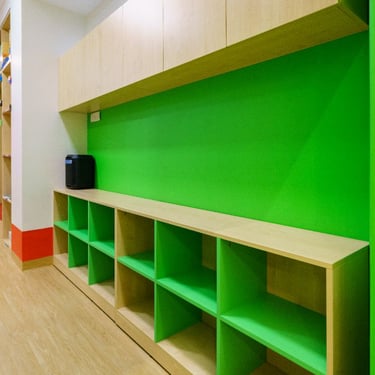
Every area within the project was carefully customised according to the functional needs of the school and the age group using the space. All furniture and materials used throughout the project are child-safe, durable, and ergonomically designed for children. The aesthetic language balances playful colours with minimal visual clutter, ensuring the environment remains stimulating without becoming overwhelming.
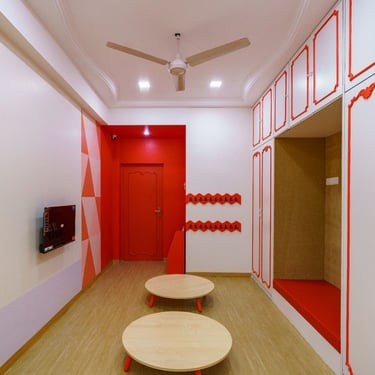
The Playgroup Classroom was designed using colour psychology principles suited for early childhood learning. Since children are naturally drawn towards the colour red during their early developmental stages, the classroom incorporates red as its dominant colour to create a sense of excitement, stimulation, and visual engagement. The space uses minimal patterns and clean design elements to maintain aesthetic balance while supporting focused interaction and active learning.
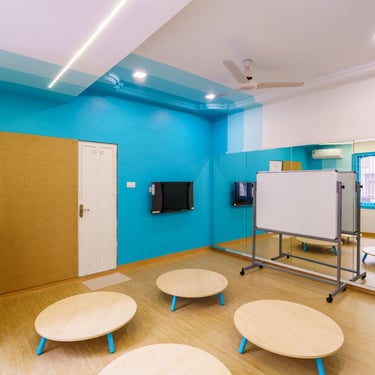
The Nursery Classroom was designed as a multifunctional space that also doubles as a dance and activity studio. The flexibility of the layout allows the school to utilise the room for workshops, extracurricular activities, or even rentable sessions beyond regular classroom use. The colours selected for the room were chosen strategically to support memory association and easy classroom recognition for children while maintaining an energetic yet organised environment.
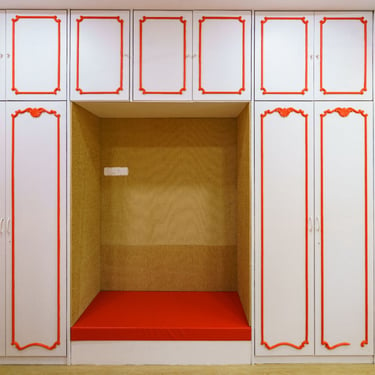
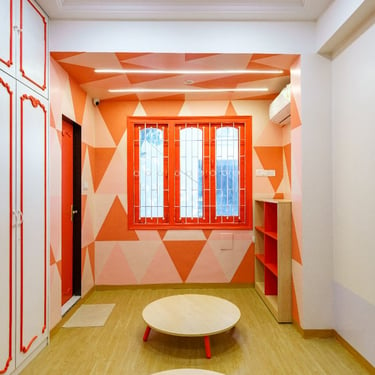
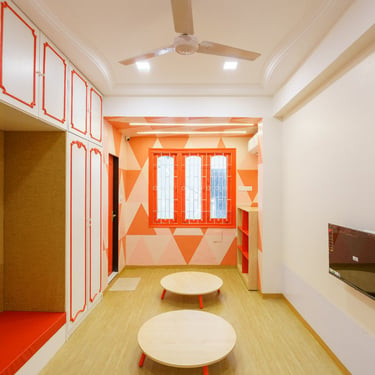
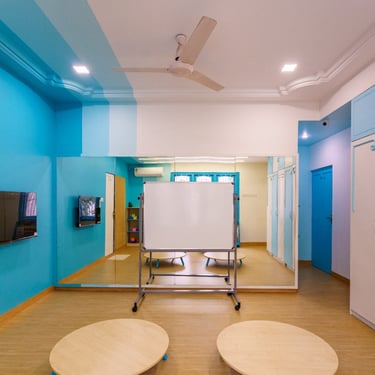
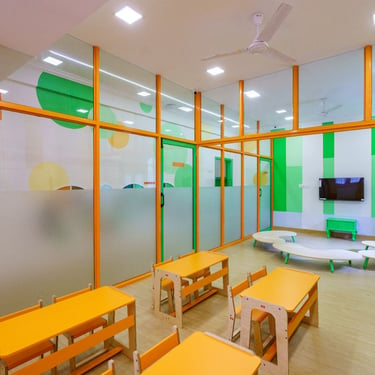
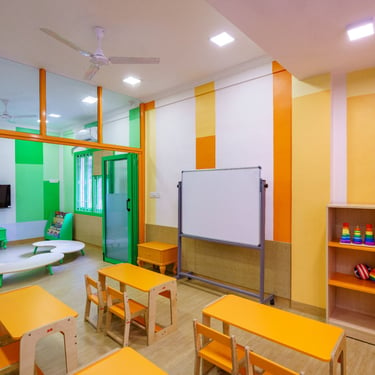
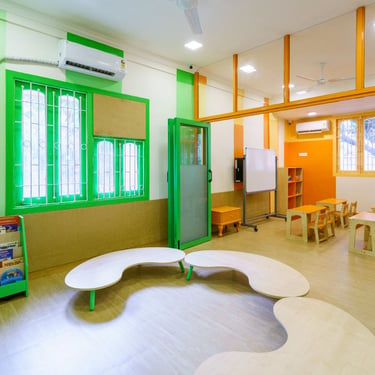
The Junior KG Classroom was designed with customised furniture appropriate for the age group. The classroom includes movable whiteboards and television units to support flexible teaching methods and interactive learning experiences. An additional flexible classroom was created as an extension of the Junior KG area, allowing both spaces to merge whenever larger group activities, workshops, meetings, or collaborative sessions are required.
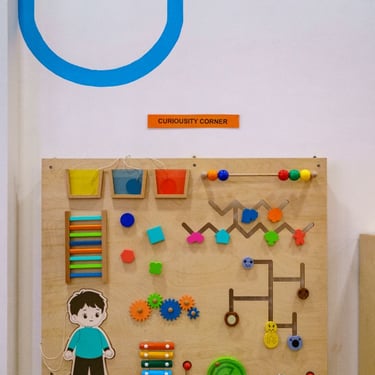
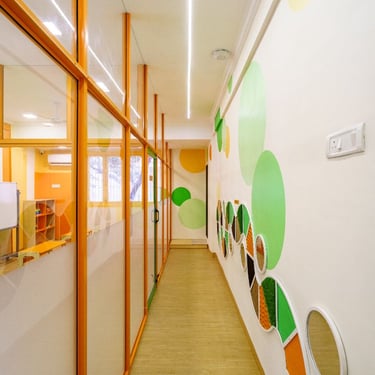
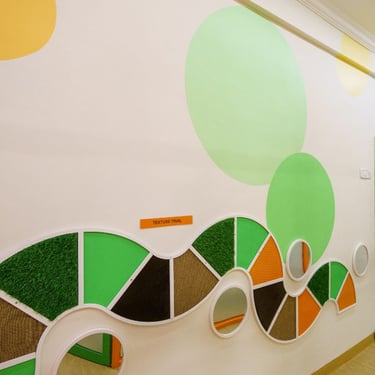
Special attention was given to circulation spaces within the school. Instead of treating the passage merely as a transitional area, it was transformed into an interactive sensorial experience through the introduction of playful sensory wall panels. This intervention encourages touch, exploration, and engagement, making movement through the corridor an active part of the child’s learning experience.
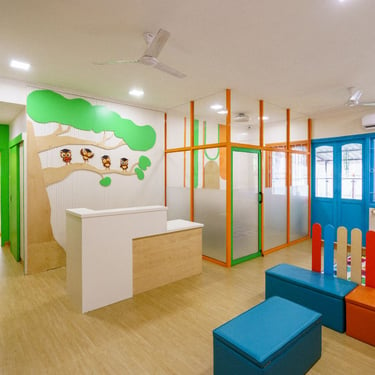
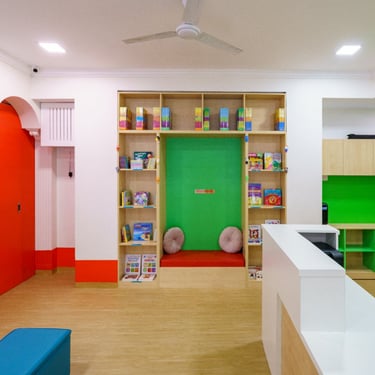
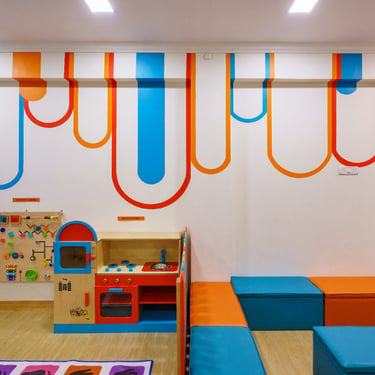
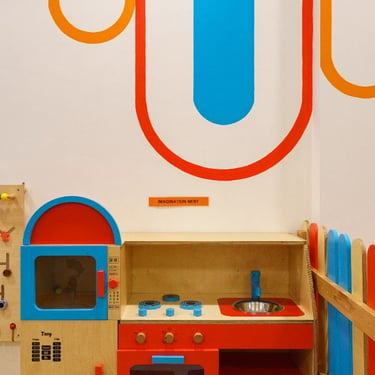
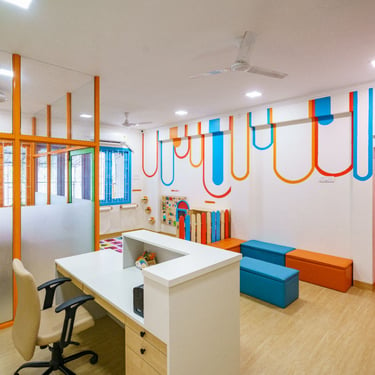
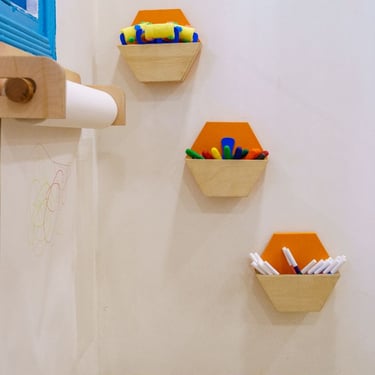
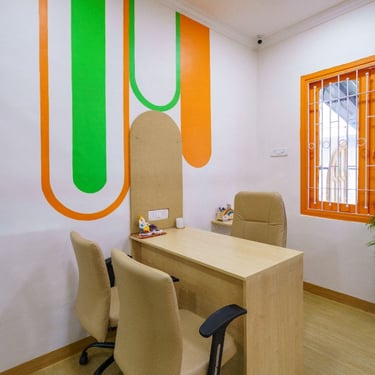
The Common Room acts as the heart of the preschool and includes a reception area, Dean’s cabin, interactive play zones, cognitive activity corners, art and pretend-play areas, and a carefully designed reading niche. The reading zone was specifically created to provide children with a calm and comforting environment that encourages focused and relaxed reading habits.
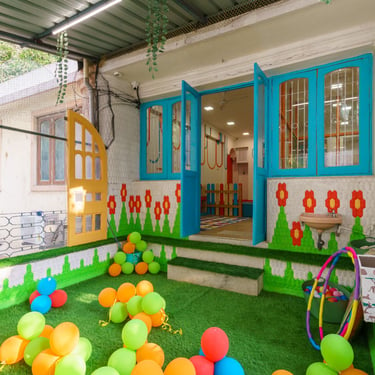
The Outdoor Area was designed as a highly flexible activity space capable of accommodating obstacle courses, trampolines, ball pools, and other outdoor play activities. The space can also function as an open-air classroom, encouraging experiential and activity-based learning.
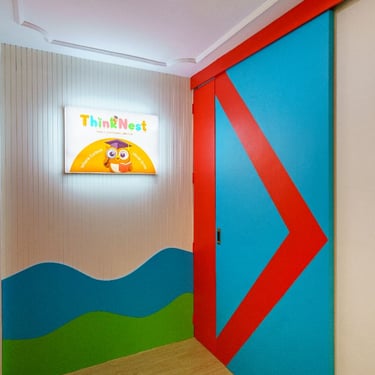
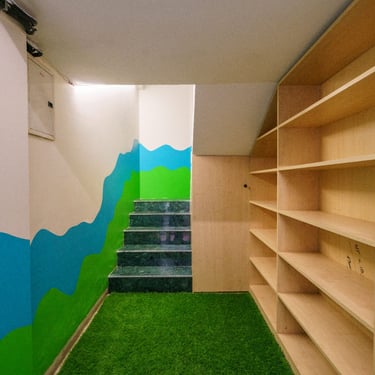
The entrance and staircase were designed to create a welcoming first impression without overwhelming the users visually. Colourful yet minimal graphic interventions were introduced along the staircase to maintain a playful identity while preserving a clean and modern aesthetic. The overall design language ensures that the preschool feels vibrant, interactive, and child-friendly while still maintaining spatial clarity and sophistication.